
Acne Scar
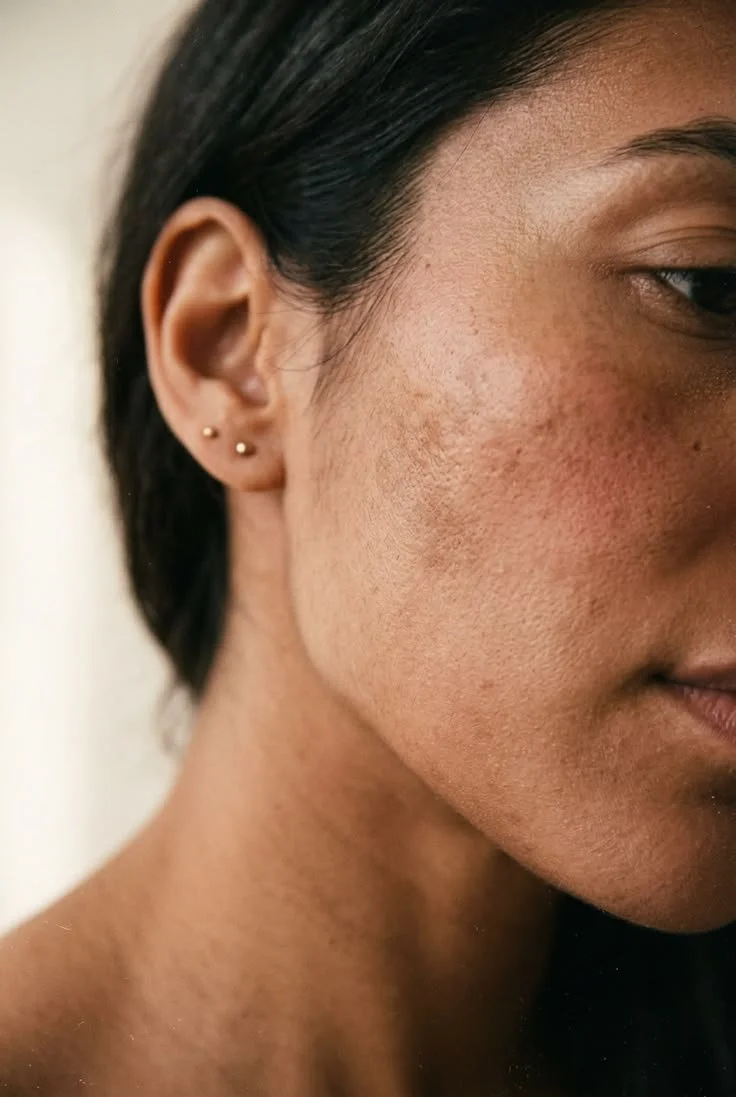
Acne scars are more than just a memory of past breakouts; they are a change in the skin’s texture and tone caused by deep-seated inflammation.
At ORI, we focus on rebuilding the skin’s internal structure to smooth out indentations and fade persistent discolouration. By combining collagen-boosting technologies with cellular repair treatments, we help improve your skin texture to its natural, smooth state.

WHAT CAUSES IT?
Think of an acne scar as the mark left behind after your skin has been through a "battle" with deep inflammation. When a breakout is severe, it damages the tissue and the structural supports underneath the surface.
If your body produces too much collagen while trying to fix the area, you get a raised, bumpy scar. However, if the inflammation was deep enough to destroy the tissue, the skin loses its support and sinks, creating the "pitted" or indented texture.
Sometimes the "scar" is not a change in texture, but a change in colour. This happens because your skin sends extra pigment or blood flow to the area to help it heal, leaving behind red or dark spots that linger long after the pimple itself is gone.

HOW CAN I TREAT AND PREVENT?
Treating acne scars is about more than just smoothing the surface, it involves rebuilding the skin’s foundation and repairing the damage caused by past inflammation.
Picosecond Lasers: This technology is highly effective for treating "colour scars," such as the stubborn red or dark spots left behind after a breakout. It works by shattering excess pigment without damaging the surrounding healthy skin.
Microneedling Radiofrequency: This treatment is ideal for pitted or indented scars. By delivering heat deep into the skin, it triggers the production of new collagen to "fill in" and smooth out the skin's texture.
PDRN & Polynucleotides: Known as "skin healers," these treatments work at a cellular level to repair damaged tissue. They strengthen the skin barrier and speed up the recovery of post-acne marks.
Subcision: A minor procedure for deep, tethered, or rolling scars. A precise medical needle is used beneath the skin to release the fibrous bands that pull the scar downward, allowing the skin to lift back up.
Chemical Peels: A targeted clinical technique for deep "ice-pick" scars. Applying a high-concentration trichloroacetic acid (TCA) drop directly inside the scar induces localized remodeling to close and narrow the deep pitted walls.
The best way to prevent scars is to treat acne early and avoid picking or squeezing spots, which pushes inflammation deeper and destroys the skin's structure. Managing stress and hormones also helps prevent the deep breakouts most likely to leave permanent marks. Finally, always wear sunscreen, as the sun can darken healing marks and make them much harder to fade.

FAQ
-
These marks, often called post-inflammatory erythema, occur because your skin sent extra blood flow to the area to repair the "battlefield" left by a deep breakout. At ORI, we use Picosecond Lasers to target this persistent colour and calm the skin without damaging the surrounding healthy tissue.
-
PDRN and Polynucleotides work at a cellular level to repair damaged tissue and strengthen the skin barrier. While they are excellent for speeding up the recovery of marks, we often pair them with collagen-boosting treatments suh as biostimulators to effectively "fill in" deeper indented scars.
-
This treatment delivers heat deep into the skin's foundation to trigger the production of fresh collagen. This process helps rebuild the structural supports that were destroyed by past inflammation, essentially smoothing out the "potholes" from the inside out.
-
Aggressive scrubbing or harsh home peels can worsen the "itch-scratch cycle" and damage your skin barrier further. We use medical formulas that safely dissolve "sticky" dead cells and encourage healthy cell turnover without causing the trauma that leads to more scarring.
-
Absolutely. UV exposure can darken healing marks, turning temporary discoloration into permanent stains that are much harder to treat. This is why daily use of a broad-spectrum SPF is a non-negotiable part of our scar prevention and treatment plan.
-
It is never too late to stimulate new collagen and repair skin texture. While early treatment is ideal, our combination of Picosecond Lasers, Microneedling RF, and cellular repair treatments can significantly refine even long-standing scars by rebuilding the skin's foundation.